






Tramadol treatment
Crystal Lake, Illinois

According to The Substance Abuse Mental Health Services Administration there are several signs to be aware of when it comes to a tramadol overdose. The staff at Northern Illinois Recovery want you to get control of your addiction. If you or a loved one require a tramadol addiction rehab center in Northern IL, we are a comprehensive resource, dedicated to providing quality treatment modalities. It's important to know the signs of a Tramadol overdose.
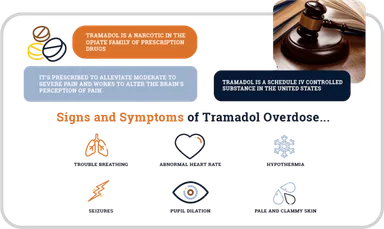
Overdosing on tramadol may lead to dizziness, muscle pain, body weakness, seizures, difficulty breathing and a blue or purple tint to nails and lips. These symptoms indicate a serious health risk and require immediate action or the need for emergency hospital treatment. Here are other signs of a tramadol overdose.
If you or a loved one experience any of these tramadol overdose symptoms or some other event mimicking the signs of a tramadol overdose, act quickly! Call 911 immediately if an overdose is suspected.

Tramadol is a narcotic in the opiate family of prescription drugs. It’s prescribed to alleviate moderate to severe pain. Abuse occurs anytime the medication is not taken according to the prescription. Tramadol works to alter the brain's perception of pain. When taking Tramadol, it's important to closely monitor your use. Speaking with the prescribing physician and your family doctor is also key. Honest and clear communication with them can help you avoid addiction.
It isn't always clear that you have become addicted to Tramadol. These are some "red flags" that indicate your Tramadol use has become unhealthy. Be objective and speak with someone today if you're exhibiting any signs of addiction. Are you using though the drug has a negative impact on your life? Have you developed a physical dependence? Rather than using as prescribed are you using Tramadol to “get high“? Are you increasing dosages without your doctor's permission? Have you begun taking Tramadol without a prescription? Have you begun to procure multiple prescriptions for Tramadol?
Knowing the signs of a Tramadol overdose and the Tramadol overdose symptoms is key to your overall health and well-being. It may mean the difference between surviving your addiction or succumbing to it. Being educated about these signs and symptoms is one positive thing you can do if you are in the throes of an addiction to Tramadol.
There are other positive things that you can do as well. Speaking with a counselor at Northern Illinois Recovery is a giant step toward wholeness and health. We provide a treatment community that fosters and fully supports your new beginning after active drug abuse. The road will not be an easy one. Our model focuses on results. We utilize the best therapeutic tools available. If you are motivated to succeed, you will be given the roadmap to reach your goal.

At Northern Illinois Recovery, we provide several addiction treatment programs, including:

Northern Illinois Recovery Center offers both individual therapy and medication-assisted treatment. Based on your intake information, we can identify if you've exhibited signs of a Tramadol overdose. Aside from Tramadol addiction, we can help with any substance abuse issue, including providing specialized care at our Xanax drug rehabilitation center for those struggling with benzodiazepine dependence. We have an around the clock physician on staff. We pride ourselves on being highly effective through a straightforward treatment model. You have been putting your life on hold long enough. Don’t wait, call us today at 855.786.1978. We can tell you more about how we can help you get your life back into your own hands.
Feel free to contact us if you require any further information about our services

Treatment · Aug 19, 2026
Adolescents struggling with substance use disorders or co-occurring mental health…

Mental Health · Aug 6, 2026
Summer is often seen as a time of joy, energy,…

Teen Treatment · Jul 16, 2026
As the school year begins, many teens experience a mix…

Mental Health · Jul 2, 2026
The barriers to obtaining comprehensive mental health treatment are more…

Mental Health · Jun 22, 2026
Post-traumatic stress disorder (PTSD) is a mental health condition that…

Mental Health · Jun 15, 2026
Veterans carry the weight of their service long after they…

Mental Health · Jun 15, 2026
Depression is one of the most common mental health conditions…

Mental Health · Jun 3, 2026
Mental and physical health are deeply connected. While many people…

Mental Health · May 22, 2026
Mental health and behavioral health are two terms that are…

Treatment · Apr 17, 2026
Many people ask, " Can you work while in rehab?”…