Are you or a loved one currently suffering from drug or alcohol addiction? If so, our rehab centers for young adults provide personalized care and evidence-based treatment to help you begin recovery. We offer a wide range of treatments and therapies for young adults. Regardless of what alcohol or drug addiction you may be suffering from, our young adult addiction treatment specialists are here to help you through every stage of recovery.
We offer rehab programs for young adults that take you from detox through initial treatment & therapy and even extended or aftercare services. We provide everything you need to help you reset your life and get back on track without addiction. Explore young adult rehab treatment options, including inpatient, outpatient, and aftercare services, to discover which may be best for you.
Whether someone needs medical detox, residential support, or a less intensive outpatient structure, the right starting point is determined through a clinical assessment. You can learn more about the full range of addiction treatment programs available at Northern Illinois Recovery Center.
Young Adult Addiction Treatment in Crystal Lake, Illinois
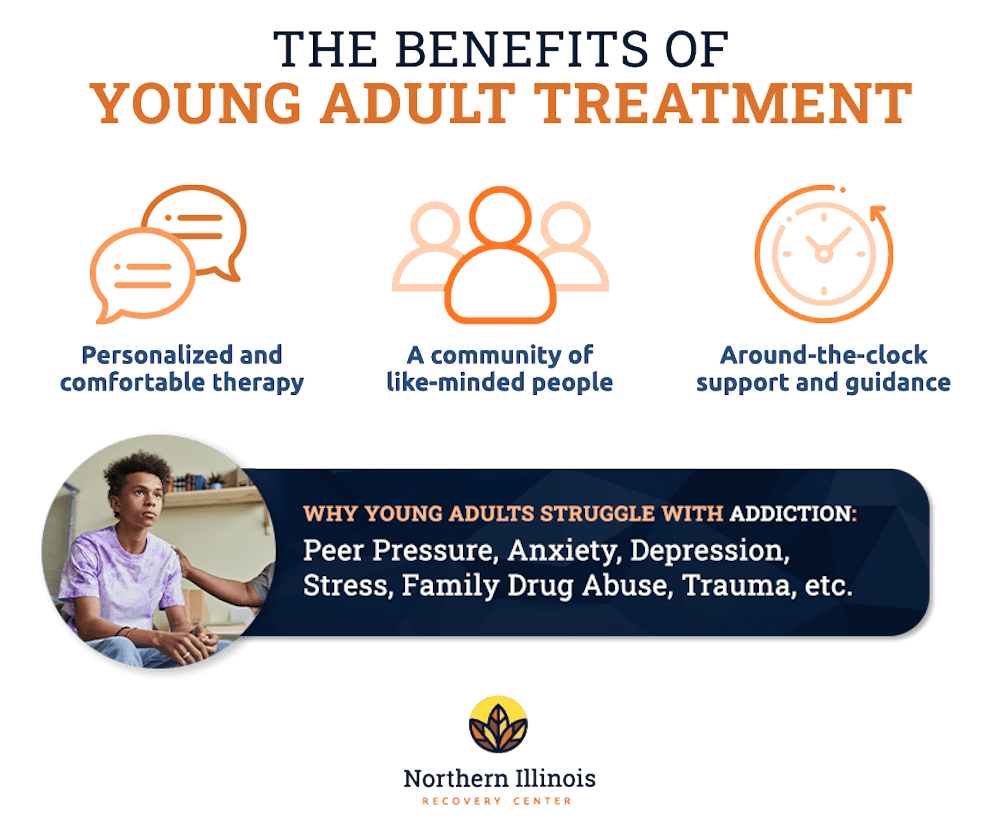
Specialized addiction treatment for young adults addresses substance use while also helping people build the coping skills and life skills they need for this stage of life. Treatment is not just about stopping drug or alcohol use; it is about developing a foundation that supports long-term recovery.
What Is Young Adult Rehab?
Treatment typically includes:
- A clinical assessment to understand the full picture
- An individualized treatment plan based on that assessment
- Individual and group therapy
- Peer support from others in similar situations
- Recovery education and relapse prevention
- Life skills development
- Continuing-care planning for after treatment ends
The level of care someone enters, and how long they stay, is based on clinical need rather than age alone.
What Is Dual Diagnosis Treatment for Young Adults?
Some young adults enter treatment with both a substance use disorder and a co-occurring mental health condition, such as anxiety, depression, or PTSD. According to SAMHSA’s 2023 National Survey on Drug Use and Health, more than 21 million adults in the United States had a co-occurring mental illness and substance use disorder in 2022. Treating only one condition while leaving the other unaddressed can make recovery harder to sustain.
Dual diagnosis treatment addresses both conditions at the same time through an integrated approach. This may include therapy for trauma, medication support where appropriate, and mental health counseling alongside addiction treatment.
What Programs Are Available for Young Adults?
Medical detox is often the first step for individuals who need medical supervision while withdrawing from alcohol or drugs. Withdrawal from certain substances can carry health risks, and a supervised detox setting allows clinical staff to monitor and manage those risks. Detox addresses physical dependence but is not a complete treatment for addiction on its own.
Residential treatment provides structured, around-the-clock care for young adults who need a higher level of support. Living on-site removes the person from environments that may be contributing to their substance use and allows them to focus fully on treatment. This level of care is appropriate when someone’s home environment, severity of use, or mental health needs require more intensive support than outpatient programs can provide.
A partial hospitalization program (PHP) offers a high level of structured clinical care without requiring the person to live at the facility. According to ASAM criteria, PHP generally involves a substantial number of treatment hours per week and is appropriate for individuals who need intensive support but have a stable living situation. It can serve as a step down from residential care or as a starting point for those who do not require 24-hour supervision.
Outpatient treatment allows individuals to participate in therapy and clinical programming while living at home or in a sober living environment. This level of care is appropriate when someone’s clinical needs can be met without residential support. Outpatient programs vary in intensity, from intensive outpatient (IOP) to standard outpatient, and are often used as a step-down from higher levels of care.
Sober living provides a structured, substance-free living environment for people transitioning out of intensive treatment. It offers accountability and peer support during a period when returning to an unsupported environment could increase the risk of relapse. Sober living is not a treatment program on its own, but it can be an important part of a continuing-care plan.
Therapies Used in Young Adult Addiction Treatment
Individual therapy provides one-on-one time with a counselor to explore the personal factors contributing to substance use. Sessions may address triggers, patterns of use, coping strategies, and recovery goals. This is where much of the deeper, more personal work in treatment takes place.
Group therapy brings together people who are working through similar challenges. It builds communication skills, accountability, and the ability to learn from shared experiences. For young adults especially, connecting with peers who understand what they are going through can reduce isolation and reinforce motivation.
Evidence-based approaches such as cognitive behavioral therapy (CBT), dialectical behavior therapy (DBT), motivational interviewing, and trauma therapy are used at Northern Illinois Recovery Center. According to the National Institute on Drug Abuse (NIDA), behavioral therapies are among the most commonly used and well-supported approaches for addressing substance use disorders.
Holistic therapy includes wellness-based practices such as yoga, meditation, art therapy, and experiential therapy. These approaches are not a replacement for clinical treatment, but they can support overall well-being and help people develop healthy routines during and after treatment.
Dual Diagnosis Treatment for Young Adults
Conditions commonly seen alongside substance use disorders in young adults include:
- Anxiety
- Depression
- PTSD
- Trauma-related conditions
- Other behavioral health concerns
When both conditions are treated together through an integrated plan, the person has a better chance of making progress on both fronts. Treating only the substance use while leaving a mental health condition unaddressed can leave someone vulnerable to returning to use as a way of managing symptoms.
What Can Young Adults Learn in Rehab?
Skills commonly developed during treatment include:
- Identifying personal triggers for substance use
- Managing cravings without using
- Handling stress in healthier ways
- Building consistent daily routines
- Improving communication with family and peers
- Setting and maintaining personal boundaries
- Developing a sober support network
- Creating a relapse prevention plan
- Making decisions that support long-term health
- Planning for school or employment after treatment
These are not abstract concepts. They are practical skills that apply directly to the situations young adults face when they leave treatment and return to their lives.
Young Adult Rehab and College
Some students are able to participate in outpatient treatment while continuing their coursework, when their clinical needs allow for it. Others may need to take a leave of absence to enter residential or PHP-level care. Taking time away from school to address a serious health issue is a reasonable decision, and many colleges have medical leave policies that support this.
Returning to school after treatment is more sustainable when it is part of a continuing-care plan that includes ongoing support, relapse prevention strategies, and a realistic approach to managing academic pressure alongside recovery.
How Long Does Young Adult Rehab Take?
Factors that influence treatment duration include:
- Severity of substance use
- Whether medical detox is needed
- Co-occurring mental health conditions
- Previous treatment history
- Relapse history
- Home and social environment
- Available recovery support
- Clinical progress over time
Treatment often involves moving between levels of care rather than staying in one program for a fixed period. Someone might begin in residential care, step down to PHP, and then continue with outpatient support. For those who need a longer structured period of recovery, a 90-day program may be appropriate.
What Happens After Young Adult Rehab?
After treatment, options may include:
- Outpatient treatment as a step-down from higher levels of care
- Sober living for structured, substance-free housing
- Ongoing individual therapy
- Support groups and peer recovery networks
- Aftercare planning and check-ins
- Relapse prevention follow-through
- Returning to school or work with a plan in place
- Rebuilding family and social relationships
According to NIDA, continuing care after initial treatment is associated with better long-term outcomes. The transition out of intensive treatment is one of the higher-risk periods in recovery, and having a clear plan in place before leaving treatment matters.
Why Choose Northern Illinois Recovery Center?
Treatment at Northern Illinois Recovery Center is individualized. Each person receives a clinical assessment, and their treatment plan is built around their specific needs, not a standard template. The facility offers multiple levels of care, from medical detox and residential treatment through PHP, outpatient services, and sober living, so that care can be matched to where someone actually is clinically.
Dual diagnosis treatment is available for young adults managing both a substance use disorder and a co-occurring mental health condition. Therapies include CBT, DBT, trauma therapy, motivational interviewing, and holistic approaches such as yoga and art therapy. Continuing-care planning is part of the treatment process, not an afterthought.
Insurance and Young Adult Rehab
Coverage typically depends on:
- Your insurance provider and specific policy
- The level of care being requested
- Medical necessity as determined by your provider
- Deductibles, coinsurance, and out-of-pocket maximums
- Prior authorization requirements
Northern Illinois Recovery Center works with insurance to help verify benefits. Visit the insurance information page to learn more or to start the verification process.
Young Adult Rehab FAQs
A young adult rehab center is an addiction treatment facility that offers programs designed around the specific needs and circumstances of young adults. Treatment is individualized based on clinical assessment rather than age alone, and may include detox, residential care, outpatient services, therapy, and continuing-care planning.
Age ranges vary between treatment programs, and eligibility depends on each facility’s specific program criteria. Contact Northern Illinois Recovery Center directly to confirm whether their young adult program is appropriate for your situation.
Young adult rehab programs can treat alcohol use disorders, drug use disorders, and co-occurring behavioral health conditions. Visit the addiction treatment page for more information on what Northern Illinois Recovery Center addresses.
Yes. Northern Illinois Recovery Center offers dual diagnosis treatment, which addresses both a substance use disorder and a co-occurring mental health condition through an integrated plan. Treating both conditions together is generally more effective than addressing only one.
Yes. College students can seek addiction treatment, and the appropriate level of care depends on clinical needs. Some students participate in outpatient treatment while continuing school; others may need to take a leave of absence for a higher level of care.
Treatment length varies based on individual needs, clinical progress, and level of care. There is no universal timeline. Many people move through multiple levels of care rather than staying in one program for a fixed period.
Coverage depends on your insurance plan, the level of care, and medical necessity determinations. Contact Northern Illinois Recovery Center or visit the insurance page to verify your benefits.
After completing an initial program, continuing care may include outpatient treatment, sober living, individual therapy, support groups, and aftercare planning. Having a structured plan in place before leaving treatment supports long-term recovery.
Insurance Verification




Receive Help at Our Young Adult Rehab Center in Illinois
Call 815-859-9494 or contact us today to start your recovery journey.