Heroin addiction is a challenging condition that affects both the body and mind. When someone decides to stop using heroin, they often experience heroin withdrawal symptoms that can be uncomfortable and sometimes dangerous. At Northern Illinois Recovery Center, we understand the complexities of heroin addiction and provide compassionate, evidence-based detox services to help individuals begin their recovery journey safely.
Detox is the first step in overcoming heroin dependence. During this process, the body clears itself of heroin while medical professionals manage withdrawal symptoms. Finding the right heroin detox center is crucial for a safe, successful start to recovery.
Here, we’ll explain what heroin detox involves, why professional medical supervision matters, and what to expect during the process. I’ll also cover treatment options available in Northern Illinois and how to choose the right center for your needs, including effective heroin addiction treatment.
Medical detox provides supervision and support during this process. Healthcare professionals monitor vital signs, manage withdrawal symptoms, and provide medications when appropriate to make the process safer and more comfortable.
According to the National Institute on Drug Abuse (NIDA), detox is an important first step in treatment, but by itself does little to change long-term drug use. Effective detox should lead to further treatment that addresses the psychological, social, and behavioral aspects of addiction, such as a heroin addiction rehab center in Illinois.
The main goals of heroin detox include:
- Physical stabilization: Safely managing withdrawal symptoms while the body clears the drug
- Preparation for treatment: Creating a foundation for ongoing recovery work
- Medical monitoring: Preventing and addressing complications that may arise during withdrawal
- Comfort management: Reducing discomfort to help individuals complete the detox process
Why Professional Medical Detox Matters
Heroin affects the brain’s reward system and creates a strong physical dependence. When someone stops using, their body reacts with withdrawal symptoms like vomiting, anxiety, muscle pain, and insomnia. Without medical help, these symptoms can become intense and difficult to manage.
Professional detox centers provide several key benefits:
- Professional Medical Detox
- Self-Detox Attempts
- Medical supervision and vital sign monitoring
- Lack of medical oversight
- Medication to ease withdrawal symptoms
- No symptom management support
- Prevention and management of complications
- Risk of severe complications
- Higher completion rates
- Higher risk of returning to use
- Seamless transition to heroin addiction treatment
- No structured follow-up care
At Northern Illinois Recovery Center, our detox program is managed by medical professionals who provide 24-hour support in a safe environment. We use evidence-based approaches to manage withdrawal symptoms and prepare individuals for the next phase of treatment.
Who Needs a Heroin Detox Program?
Some signs that someone might benefit from a professional detox program include:
- Physical dependence: When heroin use stops, the body reacts with symptoms like nausea, sweating, muscle pain, and trouble sleeping. These withdrawal symptoms indicate that the body has become dependent.
- Failed attempts to quit: A person may try to stop using heroin multiple times but return to using it each time. These repeated attempts, even when motivated to quit, can point to a need for structured support.
- Increasing tolerance: Over time, a person may need to use more heroin to get the same effects they once felt with smaller amounts. This change in tolerance is a signal that the brain is adapting to the drug.
- Daily life impact: Heroin use can interfere with work, school, family life, and personal responsibilities. If relationships are strained or routines are disrupted because of drug use, it may be a sign of addiction.
A professional assessment can help determine if detox is the appropriate first step. This evaluation typically includes a review of physical health, substance use history, and current symptoms.

What to Expect During Withdrawal
The physical symptoms of heroin withdrawal can be uncomfortable but are rarely life-threatening, and they often mirror additional heroin side effects that may persist outside of detox. Common symptoms include:
- Nausea and vomiting
- Diarrhea
- Muscle aches and pains
- Sweating and chills
- Runny nose and watery eyes
- Yawning and fatigue
- Restlessness and insomnia
In a medical detox program, healthcare professionals monitor these symptoms and provide medications to ease discomfort. While medical detox doesn’t eliminate all symptoms, it significantly reduces their severity and makes the process more manageable.
Alongside physical symptoms, many people experience emotional and psychological effects during heroin withdrawal:
- Anxiety and irritability
- Depression
- Strong cravings for heroin
- Difficulty feeling pleasure
- Mood swings
- Trouble concentrating
These symptoms often connect to underlying mental health conditions. A dual diagnosis approach helps by treating both substance use and any mental health disorders simultaneously. This may include therapy, psychiatric care, and medications that support emotional stability.
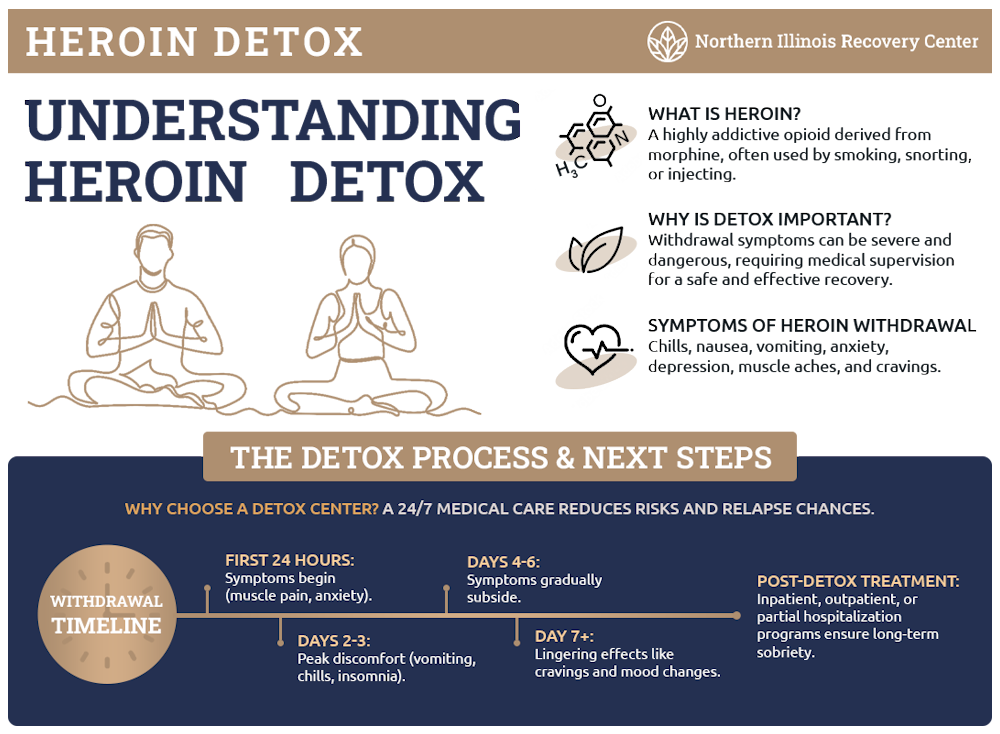
The heroin withdrawal process typically follows this timeline:
- First 24 hours:
- Symptoms begin
- Anxiety, yawning, sweating, muscle aches, restlessness
- Days 1–3:
- Peak intensity
- Nausea, vomiting, diarrhea, chills, insomnia, increased blood pressure
- Days 4–7:
- Declining physical symptoms
- Muscle aches lessen, sleep may improve, and appetite returns
- Weeks 2+:
- Psychological symptoms and Post-Acute Withdrawal Syndrome (PAWS)
- Irritability, depression, fatigue, cravings, difficulty concentrating
Each person’s experience varies based on factors like duration of substance abuse, amount typically used, overall health, and whether other substances are involved.
Medication-Assisted Treatment for Opioid Withdrawal
Suboxone combines buprenorphine and naloxone. It helps reduce withdrawal symptoms and cravings without producing the same high as heroin.
- How it works: Buprenorphine partially activates opioid receptors in the brain, reducing withdrawal symptoms without producing strong euphoria. Naloxone helps prevent misuse.
- Administration: Taken as a film or tablet placed under the tongue.
- Benefits: Reduces cravings and withdrawal symptoms; has a ceiling effect that lowers overdose risk; can be prescribed in outpatient settings.
- Considerations: May cause side effects like headache or nausea; timing of the first dose is important to avoid precipitated withdrawal.
Methadone is a longer-acting opioid medication that has been used for decades to treat opioid dependence, and a professional methadone detox in Illinois can help manage dependence safely.
- How it works: Activates opioid receptors to prevent withdrawal symptoms and reduce cravings.
- Administration: Typically taken as a liquid or tablet under supervision at a certified clinic.
- Benefits: Effective for individuals with severe opioid dependence; long-acting and can be dosed once daily.
- Considerations: Requires daily visits to a licensed heroin addiction treatment center; may have drug interactions.
Additional medications may be used to target specific heroin withdrawal symptoms:
- Clonidine for anxiety and agitation
- Anti-nausea medications
- Sleep aids for insomnia
- Over-the-counter pain relievers for aches and pains
Research shows that MAT, when combined with counseling and behavioral therapies, provides a comprehensive approach to opioid use disorder treatment and significantly improves outcomes.

Dual Diagnosis Treatment
Common mental health conditions that co-occur with heroin use include:
- Depression: Heroin use may temporarily mask depressive symptoms or develop as a response to heroin use.
- Anxiety disorders: Some individuals use heroin to self-medicate anxiety, creating a cycle where both conditions worsen over time.
- PTSD: Trauma histories are common among people who use heroin, and the drug may be used to escape distressing memories or emotions.
- Bipolar disorder: The mood fluctuations associated with bipolar disorder can increase vulnerability to substance use.
Integrated treatment addresses both heroin addiction and mental health disorders simultaneously, which is more effective than treating them separately. This approach might include:
- Psychiatric evaluation and medication management
- Trauma-informed therapy
- Cognitive-behavioral therapy (CBT)
- Dialectical behavior therapy (DBT)
- Group therapy focused on both addiction and mental health
At Northern Illinois Recovery Center, we recognize the importance of addressing co-occurring disorders and provide comprehensive dual diagnosis treatment.

Choosing Between Inpatient and Outpatient Programs
Inpatient rehab provides 24/7 care in a structured environment. This option offers:
- Continuous medical and psychological support
- Removal of triggers and access to substances
- Structured daily activities and therapy sessions
- Peer support from others in recovery
- Focus entirely on recovery without outside distractions
Outpatient treatment allows individuals to live at home while attending scheduled treatment sessions. This option provides:
- Ability to continue working or attending school
- Maintaining family responsibilities and connections
- Practicing recovery skills in real-world settings
- Lower cost than inpatient treatment
- Varying levels of intensity (standard outpatient, intensive outpatient, partial hospitalization)
A professional assessment can help determine which level of care is most appropriate based on individual needs and circumstances.
How to Verify Accreditation and Licensing
When the withdrawal symptoms peak at the 2-3 day mark and become their most intense, it’s not uncommon to be prescribed a combination of non-narcotic pain relievers, antidepressants or anti-anxiety medications, and in some cases even a milder opioid such as suboxone or methadone. These medications help relieve discomfort, reduce cravings, and prevent relapse.
Heroin Detox Center FAQs
A typical heroin detox program lasts 5-10 days, though this varies based on individual factors, including usage history and overall health.
Most private insurance plans and Medicaid cover heroin detox services as essential health benefits under the Affordable Care Act, though coverage details vary by provider.
Some individuals can maintain employment during outpatient detox programs, though medical professionals typically recommend taking at least 1-2 weeks off work during the acute withdrawal phase.
Relapse after detox is common with heroin use disorder, as shown by heroin relapse rates in Chicago, and should be viewed as an opportunity to adjust your treatment plan, not as a failure; immediate re-engagement with treatment is recommended.
Medication-assisted treatment is not substituting one addiction for another but is an evidence-based approach that helps normalize brain chemistry, block the euphoric effects of opioids, and reduce cravings.
Begin Your Recovery Journey Today
At Northern Illinois Recovery Center, we provide comprehensive heroin detox services tailored to each person’s unique needs. Our team of experienced professionals guides individuals through the detox process with dignity and respect, addressing both physical symptoms and emotional concerns. We understand that recovery extends beyond detox, which is why we offer seamless transitions to our continuum of care programs.
If you or someone you care about is struggling with heroin dependency or addiction, reaching out for professional help is the courageous first step in the recovery process. With the right support, recovery is possible, and a healthier, more fulfilling life awaits. Contact us today.