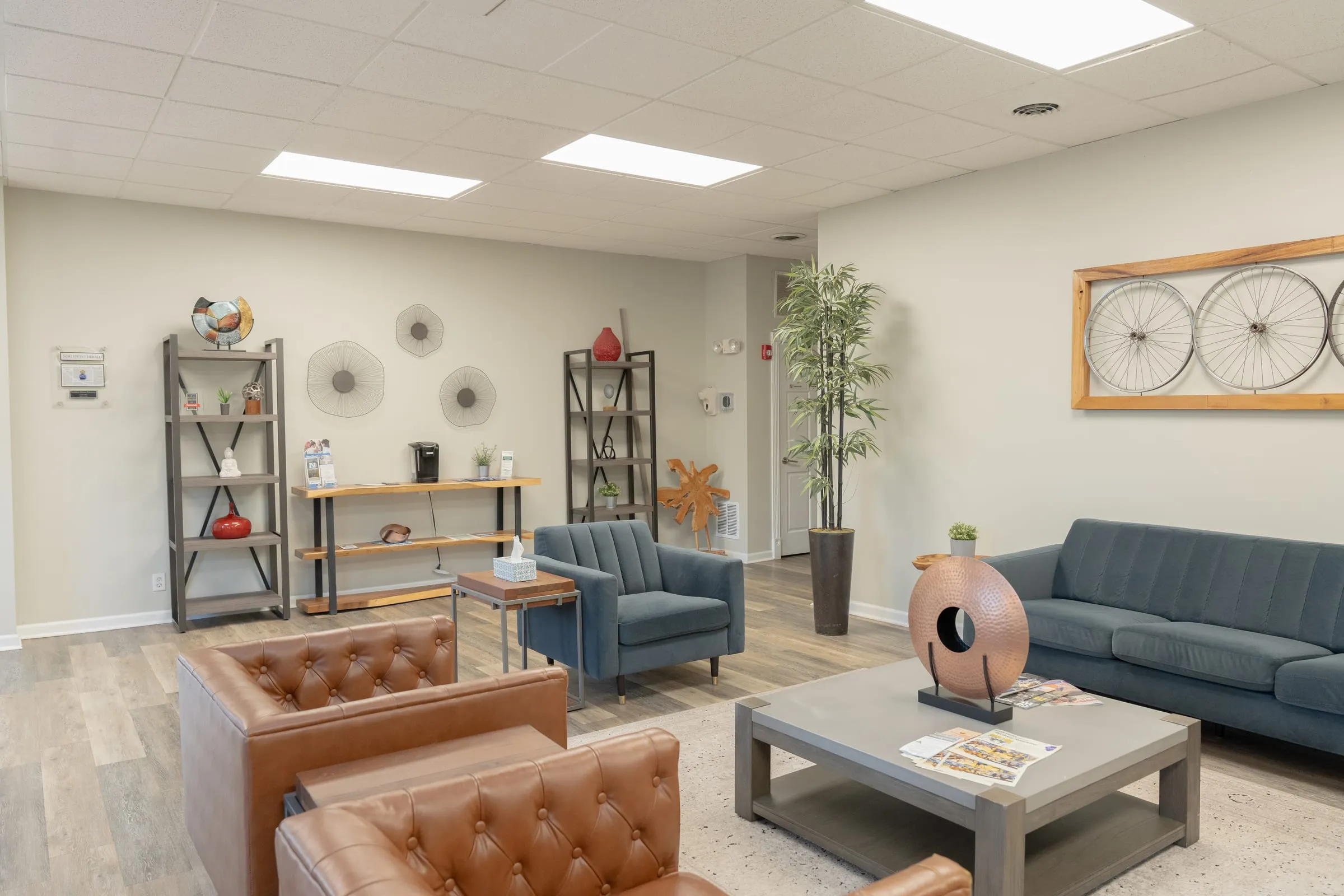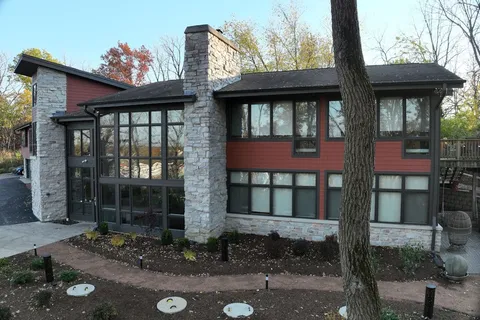
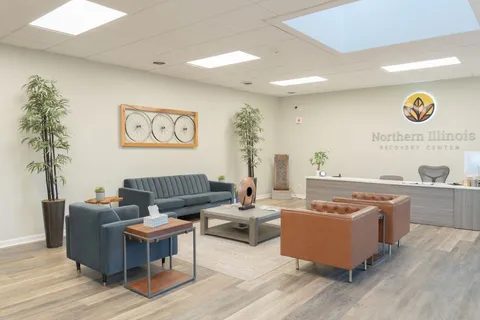
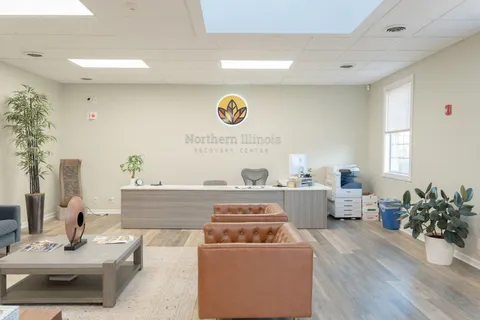
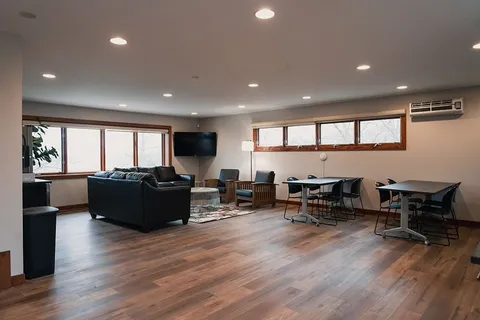

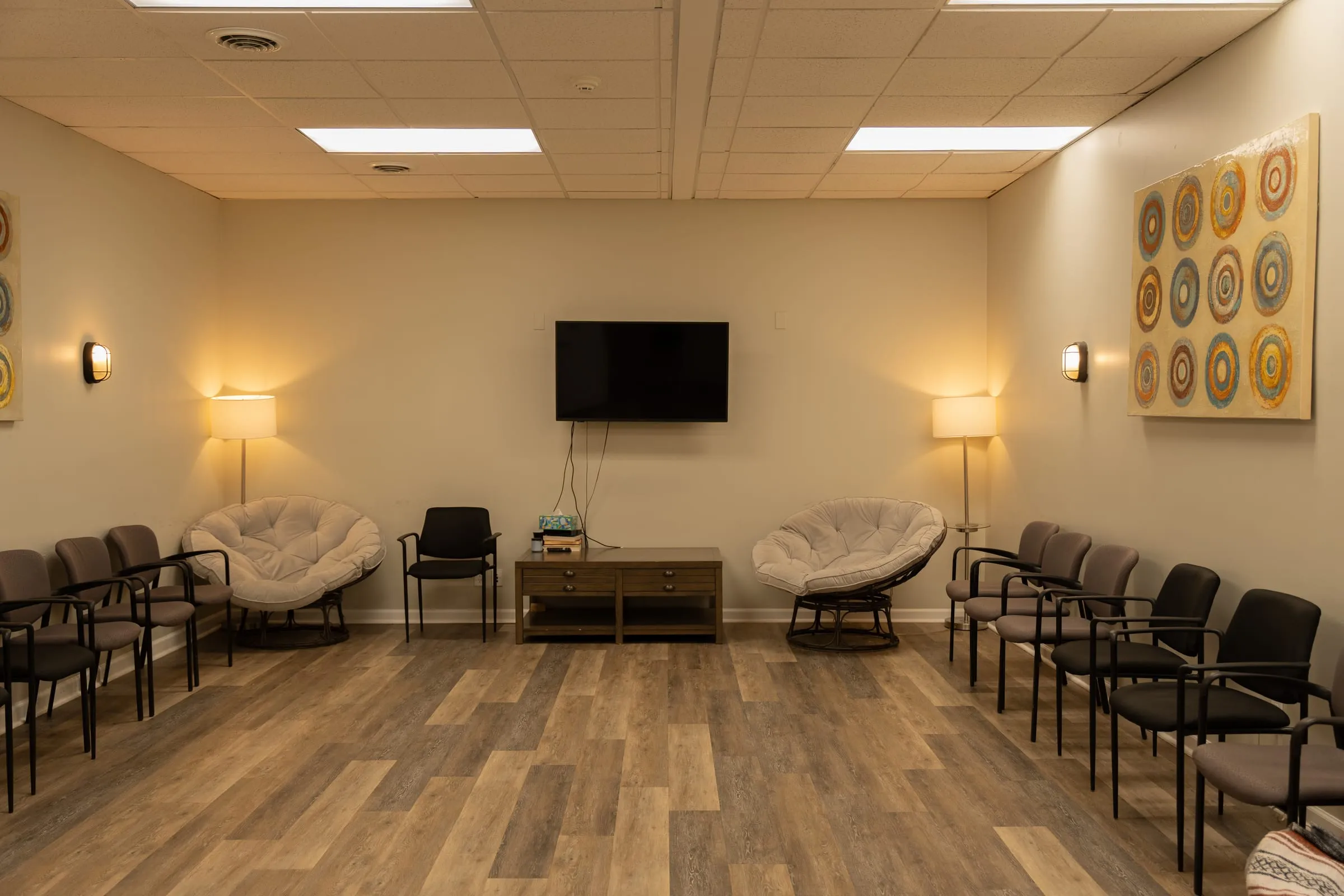
Facility tour
Crystal Lake, Illinois


Each individual is unique and may respond differently to treatment for addiction. For this reason, treatment programs come in a variety of different forms with varying levels of intensity. While residential options are available for the most severe cases, not every individual will need this type of care.
An outpatient program can be precisely what some people need, but not work for others. For individuals who don’t entirely fit into either program, a partial hospitalization program (PHP) could be exactly what they need. A partial hospitalization program can prove to be a beneficial treatment option for people looking for support and strategies to enhance overall functionality and well-being.
If you are looking for a partial hospitalization program in Illinois or the surrounding areas, Northern Illinois Recovery Center in Crystal Lake, Illinois, can help. Our treatment center is about 45 miles from Chicago, making it an ideal area for both residential treatment and outpatient treatment programs.
Northern Illinois Recovery Center is licensed by IDHS/SUPR (#A-2616-0001-A) and accredited by The Joint Commission to provide Partial Hospitalization (PHP).
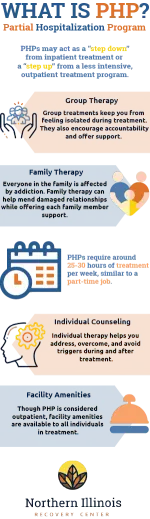
A partial hospitalization program (PHP), also known as a day treatment program, is the perfect fit for patients who can’t commit to inpatient programs but require more intensive treatment than standard outpatient programs offer. PHPs are situated between residential treatment centers and outpatient centers in terms of intensity of treatment. The main goals of a partial hospital program typically include:
Partial hospitalization programs are similar to inpatient care, but patients are allowed to live away from the facility. This flexible form of treatment is appropriate for individuals who have a safe, stable environment to recover in. A partial hospitalization program may even help patients avoid inpatient care, which tends to be more expensive.
One of the benefits of PHPs is that they offer a more intensive level of care than traditional outpatient therapy, but are less restrictive than inpatient care. This makes them an ideal option for individuals who need more support than outpatient therapy can provide, but do not require the level of care provided by an inpatient hospitalization program.
In terms of cost, partial hospitalization programs are generally less expensive than inpatient care. But they may be more expensive than traditional outpatient therapy. However, the cost of a PHP can vary depending on the specific program and the individual’s insurance coverage.
While a partial hospitalization program is an option available at our addiction recovery center, we wouldn’t recommend it to all of our patients. A patient may be a good fit for PHP if they:
Have completed inpatient addiction treatment
Have received treatment for co-occurring mental illnesses
Have a stable, safe home environment for recovery
Have an addiction with less severity
A partial hospitalization program is designed for people who don’t need supervision around the clock. It also applies to patients who have already completed inpatient care. PHPs can also be beneficial for individuals who need ongoing mental health care to support their recovery. For example, if someone experiences suicidal thoughts in recovery, they may wish to stay connected to more intensive services to function effectively in the initial period after treatment.
For individuals navigating the challenging path of recovery from addiction or managing significant mental health conditions, a Partial Hospitalization Program (PHP) offers a powerful and effective level of care. It serves as a crucial middle ground, providing intensive therapeutic support while allowing participants to gradually reintegrate the skills they learn into their daily home environment. PHP offers benefits such as:
Structured Routine and Accountability:
Comprehensive, Integrated Care:
Real-World Application and Transition:
The specific structural and therapeutic benefits of a PHP are key to its success in fostering sustainable recovery and improved mental wellness.
For individuals navigating the challenging path of recovery from addiction or managing significant mental health conditions, a partial Hospitalization Program (PHP) offers a powerful and effective level of care. It serves as a crucial middle ground, providing intensive therapeutic support while allowing participants to gradually reintegrate the skills they learn into their daily home environment.
Patients won’t need to commit to a month or more in a live-in center at a PHP drug rehab or mental health program. This level of care is not necessary in most cases, but standard outpatient options are not quite enough. Partial hospitalization programs occupy a perfect niche that combines thorough medical care with optimal personal freedom.
Our program is designed to provide immediate support and intervention for serious concerns, including non-suicidal self-injury, within a supportive and structured clinical environment. At Northern Illinois Recovery Center, our partial hospitalization program utilizes an evidence-based blend of therapies to address the root causes of addiction and mental health challenges while supporting overall well-being. Patients can expect a comprehensive schedule that includes:
Individual Therapy: This includes one-on-one sessions with a dedicated therapist to explore personal triggers, develop coping strategies, and work through underlying trauma in a private setting.
Group Therapy: Facilitated group sessions provide peer support, reduce feelings of isolation, and allow individuals to learn from the experiences and insights of others on a similar journey.
Cognitive Behavioral Therapy (CBT): CBT is a core therapeutic modality that helps patients identify, challenge, and change negative thought patterns and behaviors that contribute to their conditions.
Dialectical Behavior Therapy (DBT): DBT is a skills-based training that focuses on improving emotional regulation, distress tolerance, interpersonal effectiveness, and mindfulness.
Holistic Therapies: Holistic therapies, such as mindfulness meditation, yoga, or art therapy, are integrated to heal the mind-body connection and reduce stress.
Family Therapy Sessions: Designed to repair relationships, family therapy sessions improve communication and educate family members on how to best support their loved one’s recovery process.
This multi-faceted approach ensures that each individual receives the personalized and comprehensive care necessary to build a strong foundation for lasting recovery.

If you are considering enrolling in a PHP, exploring the following answers to commonly asked questions will be helpful.
A PHP typically lasts for several hours a day, about 3-5 times per week. This may vary based on the facility itself and what a patient needs. As for duration, partial hospitalization programs usually last a month (more or less). Duration can depend highly on the person and their treatment needs. Our aftercare program is essential for people who want to continue receiving guidance after treatment to stay on the path to recovery.
After completing PHP treatment, the typical next step is to step down to a less intensive level of care, such as an Intensive Outpatient Program (IOP), to continue building on the foundational skills learned while gradually increasing independence. This structured step-down approach is crucial for maintaining recovery momentum and often includes transitioning to standard outpatient therapy, joining alumni support groups, and developing a robust aftercare plan to manage the transition back to everyday life.
The primary difference between a Partial Hospitalization Program (PHP) and an Intensive Outpatient Program (IOP) is the required level of care and time commitment, with a PHP providing more intensive, structured, and medically supervised treatment often resembling a full-time day program, while an IOP involves fewer weekly hours and offers greater flexibility for reintegration into daily life. A PHP typically requires attendance for five to seven hours per day, up to five days a week, and includes comprehensive services like medication management and multiple daily therapy sessions, whereas an IOP usually demands a commitment of three hours per day for three to five days a week, focusing more on group and individual counseling with less medical oversight.
The cost of a PHP can vary significantly, with the total expense depending on factors such as the specific facility, its location, the duration of the program, and the types of therapies included. At Northern Illinois Recovery Center, we’re dedicated to making addiction and mental health treatment accessible to all who need it. Our admissions team can assist you in verifying your insurance coverage for PHP and reviewing payment options.
Patients likely will need to adjust their work, school, or family schedule to attend a PHP, but the flexibility this program offers allows individuals to still maintain some outside responsibilities. However, some patients prefer to take vacation time from these responsibilities to focus on healing. Speak to your care provider or our admissions team to discuss treatment scheduling and determine a treatment plan that fits your needs.
What Our Patients Say…
Amazing place! The staff at NIRC are absolutely wonderful!They are all very kind, caring dedicated, and compassionate. Their program is truly a godsend… it works if you work it!Every single person there I have to thank for turning my life around and helping me get sober. I met so many wonderful people, and am glad I chose them for my recovery!!!
I always rave about how amazing this rehab was and how positively it impacted me. I was not the same person I was coming in as I was coming out. I recommend this out of any rehab center. 100% worth it, please if you're struggling with addiction I promise NIRC will help. The community, the skills such as cooking shopping etc, the outings really help you reconnect with the world and get you off on a very strong foot for your recovery journey. Don't wait.
I had a good experience and learn a lot from this program. The staff worked really hard to get me a place to go. I am now in sober living. I enjoyed my time at this treatment center. Everybody did a great job and excellent job..it’s the best I’ve ever been . I came here on a grant .Now the journey continues
Great place more freedom than usual rehabs and teaches you how to be independent and preps you for living on your own and taking cadre of yourself. Weekends are filled with fun and a activity like top golf, arcades, bowling, etc...
Staff was amazing and they do such an amazing job to help the journey for sobriety
Patient reviews load here on the live site.
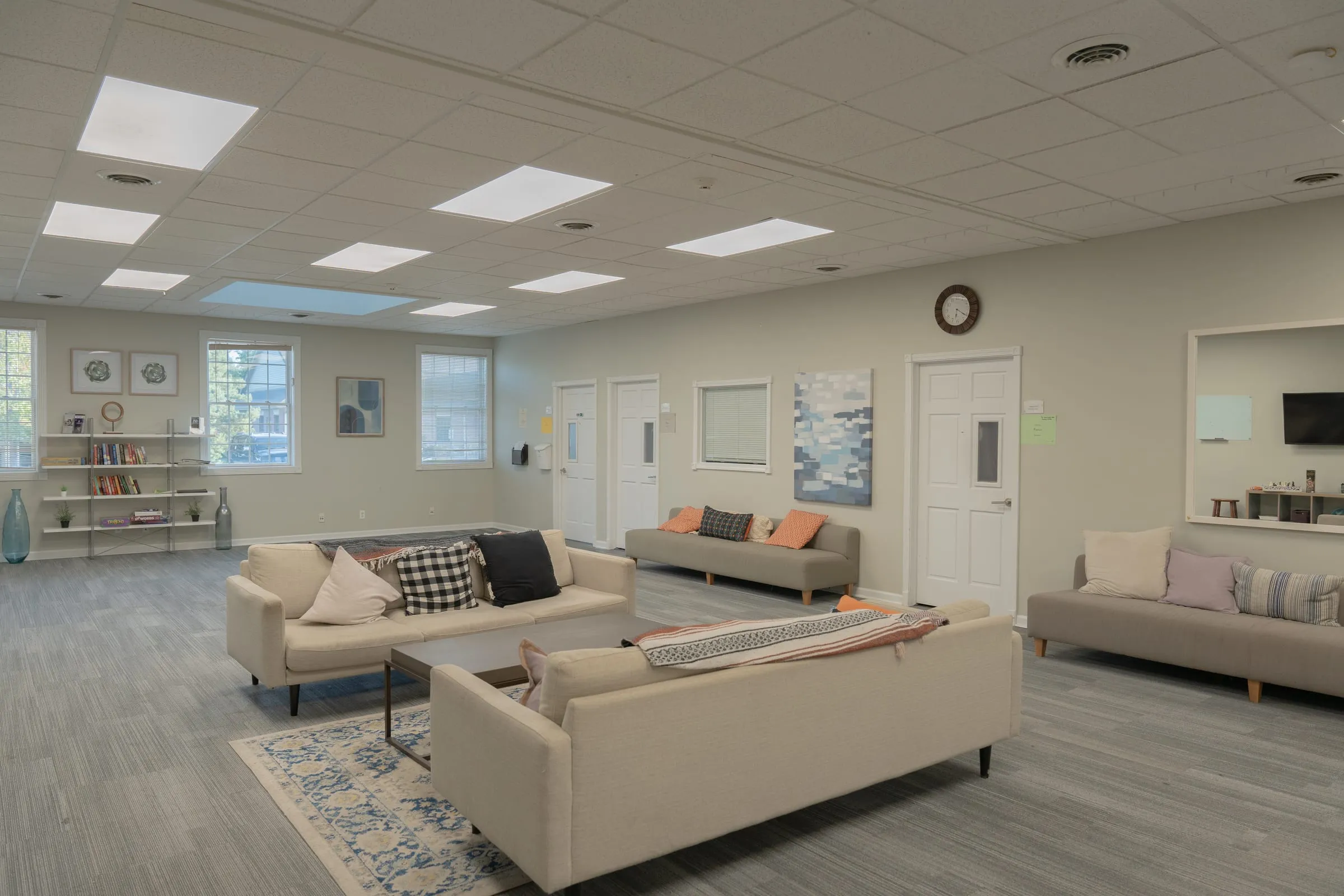
If you have been looking for the best partial hospitalization program near you, Northern Illinois Recovery Center may be just what you need. Our programs revolve around evidence-based treatments designed to produce results, including coping skills and sustaining lasting recovery.
Our staff works as hard as you do to ensure that you can make a full recovery. Clients feel safe and welcome at our treatment center and truly believe that their counselors, therapists, and medical specialists have their best interests at heart. On top of a long track record of success, Northern Illinois Recovery Center’s partial hospitalization program can treat a full range of substance abuse disorders. These include:
Addiction is a complex disease that can make treatment a challenge, no matter who you are or where you seek out support. Regardless of the substance that you struggle with, PHPs could be the perfect recovery method for you. Our PHPs can accommodate individuals who need to balance their treatment with daily responsibilities, such as work or school. If you also need help with mental health care or in your transition from an inpatient treatment program, we can help.
People can heal from addiction with the right support and make living with this chronic disease manageable. Reach out to our team at Northern Illinois Recovery Center today to find out more about the services we offer and if our PHP is right for you.