At Northern Illinois Recovery Center, we understand how overwhelming opioid addiction can be physically, mentally, and emotionally. Our OxyContin addiction treatment program combines medical expertise, evidence-based therapy, and holistic wellness to help you safely recover and rebuild your life.


Once dependence develops, stopping use can cause painful withdrawal symptoms, making it extremely difficult to quit without professional help. The Centers for Disease Control and Prevention (CDC) reports that opioids were involved in more than 3,000 overdose deaths in Illinois in 2024, underscoring the need for compassionate and effective treatment options.
Causes and Risk Factors for OxyContin Addiction
Many individuals develop dependence after using OxyContin for legitimate pain management, but by taking higher doses or continuing use longer than prescribed.
A family history of addiction or mental health disorders can increase the likelihood of developing substance use issues.
People with depression, anxiety, PTSD, or trauma are more vulnerable to opioid misuse as they may use OxyContin to self-medicate emotional pain.
Living in environments where substance use is common or having limited access to mental health care can raise the risk of misuse.
Individuals with long-term pain conditions may be prescribed opioids for extended periods, which increases the likelihood of dependence.
Using drugs or alcohol at a young age can alter brain development and heighten addiction risk later in life.
Understanding these risk factors helps our clinical team create personalized recovery plans that address both the symptoms of addiction and the underlying causes.
Insurance Verification


Risks of OxyContin Use and Addiction
Major risks include:
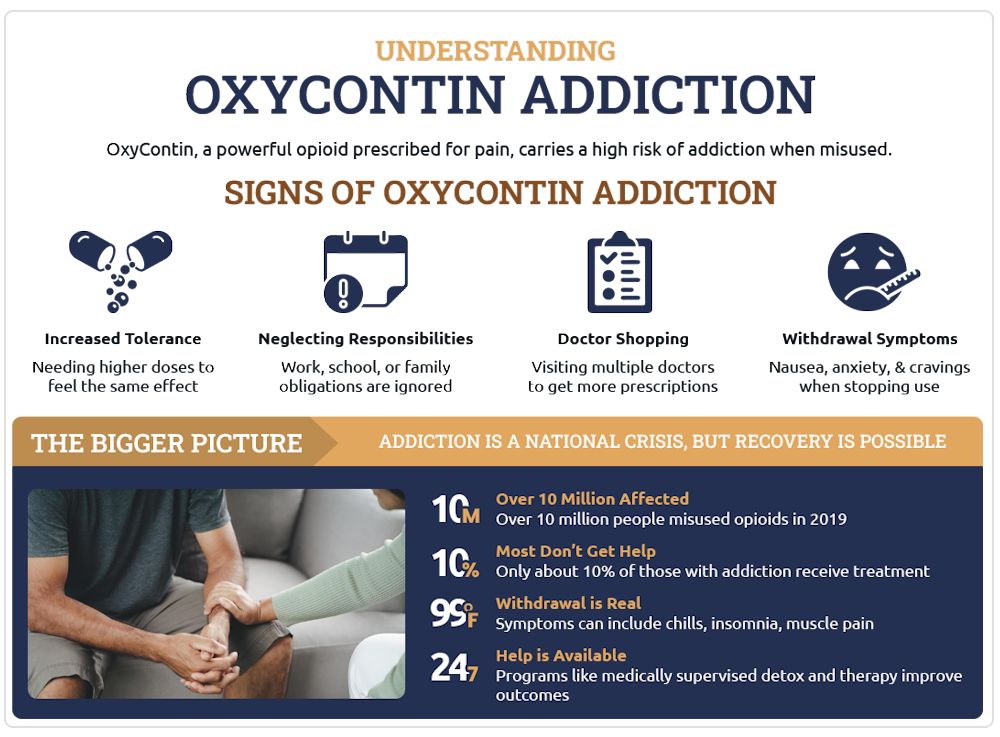
The body quickly adapts to OxyContin, resulting in withdrawal symptoms such as muscle pain, chills, nausea, insomnia, and anxiety when usage decreases or stops.
OxyContin can slow breathing and heart rate to dangerous levels, particularly when combined with alcohol or benzodiazepines.
Tolerance builds rapidly, leading users to take dangerously high doses. An overdose can cause unconsciousness, brain damage, or death.
Chronic OxyContin use alters how the brain experiences pleasure and motivation, often resulting in mood swings, depression, and reduced cognitive function.
Addiction can lead to job loss, relationship strain, legal troubles, and financial instability.
Many individuals mix OxyContin with other substances to intensify effects, a combination that drastically increases overdose risk.
The earlier treatment begins, the lower the likelihood of these risks becoming permanent. Our medical and clinical teams at Northern Illinois Recovery Center provide a safe, structured path to recovery and renewed health.

Signs and Symptoms of OxyContin Addiction
- Taking OxyContin in larger amounts or longer than prescribed
- Intense cravings or preoccupation with obtaining the drug
- Doctor shopping or illegal use
- Fatigue, confusion, or slowed breathing
- Withdrawal symptoms when cutting back
- Mood changes or irritability
- Neglecting responsibilities or relationships
If these symptoms sound familiar, professional treatment can help you or your loved one safely overcome addiction and reclaim control.
Comprehensive OxyContin Addiction Treatment in Northern Illinois
Detox is the first and most critical step toward recovery. Under 24/7 medical supervision, clients can safely withdraw from OxyContin with minimal discomfort.
When appropriate, Medication-Assisted Treatment (MAT) may be used to ease withdrawal symptoms and reduce cravings.
Learn more: Medical Detox Program
After detox, clients transition into a structured treatment program tailored to their stage of recovery. Options include:
- Partial Hospitalization Program (PHP)
- Intensive Outpatient Program (IOP)
- Outpatient Treatment (OP)
Each level of care includes clinical therapy, group support, and holistic wellness sessions.
Our licensed clinicians use proven therapeutic methods to address both addiction and co-occurring disorders:
- Cognitive Behavioral Therapy (CBT)
- Dialectical Behavior Therapy (DBT)
- Trauma-informed therapy
- Individual and group counseling
- Family therapy and education
Healing is about more than overcoming cravings — it’s about restoring balance. Our holistic therapies help clients reduce stress, build resilience, and reconnect with themselves through:
- Yoga for Addiction Recovery
- Mindfulness and meditation
- Nutritional support
- Fitness and recreation
MAT detox combines medications like buprenorphine, naltrexone, or methadone with therapy to reduce cravings and prevent relapse. Our clinical staff closely monitors progress to ensure comfort and safety.

Relapse Prevention and Aftercare
Clients learn to identify personal triggers, manage stress, and apply practical coping skills developed in treatment. Our aftercare programs help clients stay grounded in sobriety through:
- Ongoing therapy and counseling
- Alumni support groups
- Sober living options
- Relapse prevention training
Through consistent follow-up care and a strong support network, individuals gain the tools they need to sustain recovery and continue growing, physically, emotionally, and spiritually, long after leaving our program.
OxyContin Addiction FAQs
Addiction to OxyContin can be rooted in legitimate prescription use, genetic factors, or emotional distress. Over time, tolerance and physical dependence develop, making it hard to stop without treatment.
Prolonged misuse can lead to organ damage, brain chemistry changes, mental health issues, and overdose.
It’s not safe to quit cold turkey. A medically supervised detox ensures comfort and safety while preventing severe withdrawal symptoms.
Symptoms usually peak within 72 hours and may last up to 10 days, though psychological effects can linger longer.
We use a blend of medical detox, behavioral therapy, holistic wellness, and relapse prevention to treat the whole person, not just the addiction.
Yes. With proper treatment, support, and commitment, long-term recovery is absolutely achievable.