






Alcohol treatment
Crystal Lake, Illinois

Consuming too much alcohol affects people in different ways. For some people, the lack of inhibitions while drinking can make them more boisterous, brave, or exuberant. For others, it can unfortunately lead to increased aggression and anger, also known as being an "angry drunk" or a "mean drunk."
Understandably, this behavior can be upsetting to those around the angry drunk. It can also be dangerous, especially for those in a relationship with someone who becomes violent while under the influence.
If someone close to you gets mean when they drink, you may be wondering how to deal with an angry drunk. In this guide, we at Northern Illinois Recovery Center will explore the potential factors that trigger aggressiveness in people while drinking and provide tips on how to handle an angry drunk.
If you or a loved one are dealing with alcohol, please feel free to reach out to our Illinois alcohol rehab center. We can help you today and connect you with a sober living house to support long-term recovery.
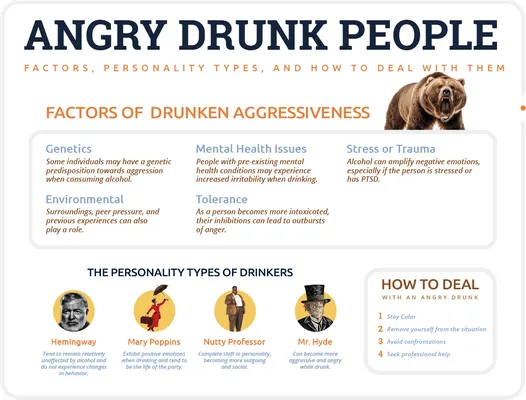
The effects of alcohol on the brain are complex and can vary from person to person. However, there are some potential factors that may contribute to a person becoming aggressive while intoxicated. These include:
These potential underlying factors can influence a person's behavior when drunk and may contribute to them becoming an angry drunk.

A 2015 study in the Journal of Addiction Research and Theory found that there are different personality types when it comes to "types of drunks." The different types vary in how they act under the influence of alcohol, with some becoming angry or aggressive. These personality types are:
While some of the personality types associated with drinking are non-threatening, Mr. Hydes can potentially turn violent and pose a risk to themselves and those around them. If you or someone you know identifies as a Mr. Hyde while drunk, it is essential to have strategies in place to deal with angry behavior.

If you find yourself in the presence of an angry drunk, it's essential to know how to handle the situation safely and effectively. Here are some tips:

Despite getting angry when drinking, remember that your loved one may be unable to abstain from alcohol at all. In these cases, a substance use disorder (SUD) may be present. In such cases, seeking treatment at a reputable facility like Northern Illinois Recovery Center can help build the foundation for a sober life.

Drinking alcohol affects not only the body, but also the mind. While it may initially provide a feeling of relaxation, consuming alcohol can also lead to increased irritability, aggression, and even violence. Chronic and excessive alcohol consumption has been linked to various mental health issues that can contribute to anger, including:
Moreover, excessive drinking can also cause damage to the brain's frontal lobe, which is responsible for controlling impulsive behavior and regulating emotions. This damage can further contribute to a person becoming more aggressive when drinking as their inhibitions are lowered.

Chronic use of alcohol is also connected to a decline in cognitive function, making it hard to make good decisions. As well as a tendency to act impulsively which can lead to a person failing to maintain their anger. Finally, a disregard for consequences and impaired judgment can also contribute to aggressive behavior while intoxicated.
If you're someone who becomes aggressive after consuming alcohol, it's essential to recognize and address the issue. Here are some steps you can take:

Remember that you are not alone in this journey, and there is always help available. Don't let being an angry drunk ruin your relationships and hinder your potential for a happy, healthy life. Taking our Drug Addict Test can help you better understand your situation and the next steps toward recovery. Contact us today to learn more about our highly effective addiction treatment options. Let us help you on your path toward recovery and a brighter future.
Whether you or a loved one is dealing with the fallout of being an angry drunk, there is hope. When an alcohol addiction is present, it can be difficult and almost impossible to stop drinking on one's own. It is also not safe for a chronic drinker to stop drinking cold turkey without the help of medical professionals at a drug or alochol detox center.
To end the cycle of anger and alcohol, an individual with an alcohol use disorder (AUD) will require medical detox and inpatient alcohol rehab. In an inpatient treatment program—also known as residential rehab—the individual will have an opportunity to get away from their normal environment, where they may be triggered and tempted to drink. They will receive the same highly effective treatment options as those in our outpatient program but with the added benefit of 24/7 support and supervision.
If you find yourself questioning whether you are an angry drunk, it's essential to seek help. At Northern Illinois Recovery Center, we offer highly effective treatment options that can support individuals in achieving results in their recovery journey. Our programs range from outpatient options for those who cannot commit to a residential program to specific programs for women and detox programs to help ease withdrawal symptoms. For teens seeking structured support while continuing their daily routines, our teen IOP Illinois program provides tailored therapy and guidance. We believe that everyone deserves a chance at a healthy, happy life free from the grips of addiction. Contact us today to learn more about our accessible and affordable treatment options at drug rehab in IL. Take the first step towards sobriety and reclaiming your life. The cycle of anger and alcohol can be
At Northern Illinois Recovery Center, we understand that seeking treatment for alcohol addiction can be overwhelming and scary. That's why we strive to make our programs accessible, affordable, and highly effective. Our team of experienced professionals is dedicated to helping individuals achieve long-term recovery and build a life free from the destructive cycle of anger and alcohol.
We utilize evidence-based methods backed by years of experience to guide our clients through the recovery process. Our programs include individual and group therapy, holistic treatments, and a focus on relapse prevention to ensure long-term success. Additionally, we offer specialized treatment for co-occurring mental health disorders that often accompany substance abuse, similar to what is provided at dual diagnosis addiction treatment centers.
Take the first step towards reclaiming your life and breaking free from the cycle of anger and alcohol at Northern Illinois Recovery Center. Contact us today to learn more about our treatment options and begin your journey toward a brighter future. Remember, you're not alone, and we are here to support you every step of the way.
Feel free to contact us if you require any further information about our services
Treatment · Aug 19, 2026
Adolescents struggling with substance use disorders or co-occurring mental health…

Mental Health · Aug 6, 2026
Summer is often seen as a time of joy, energy,…

Teen Treatment · Jul 16, 2026
As the school year begins, many teens experience a mix…

Mental Health · Jul 2, 2026
The barriers to obtaining comprehensive mental health treatment are more…

Mental Health · Jun 22, 2026
Post-traumatic stress disorder (PTSD) is a mental health condition that…

Mental Health · Jun 15, 2026
Veterans carry the weight of their service long after they…

Mental Health · Jun 15, 2026
Depression is one of the most common mental health conditions…

Mental Health · Jun 3, 2026
Mental and physical health are deeply connected. While many people…

Mental Health · May 22, 2026
Mental health and behavioral health are two terms that are…

Treatment · Apr 17, 2026
Many people ask, " Can you work while in rehab?”…