




Facility tour
Crystal Lake, Illinois


Do not let depression rule your life. You can get the help you need for mental health disorders from Northern Illinois Recovery Center. Our depression treatment services give you a way to effectively address both your mental health condition and your alcohol or drug addiction. You can end your struggle with depression and learn how to live a happier, healthier life.
If you are seeking treatment for this mental health disorder and substance use disorder, know that we offer several behavioral health services to treat all types of mental health conditions that co-exist with addiction. You can discover both the cause and symptoms of your depression, and get the help you need to recover from substance abuse.
Depression is an ongoing sense of sadness that you may feel regardless of the circumstances that surround you. Although an event can trigger depression, it does not have to be. Things can be going well, and yet you feel sad and hopeless inside. For adolescents struggling with these feelings, intensive outpatient treatment for teens can provide structured therapy, coping strategies, and support while allowing them to continue attending school and participating in daily activities.
Sadness and depression are related but distinct emotional states. Sadness is a normal human emotion that everyone experiences in response to adverse or disappointing events, such as the loss of a loved one, relationship problems, or failure. It is typically a temporary and natural reaction to specific circumstances.
Depression, on the other hand, is a mental health disorder characterized by persistent and pervasive feelings of sadness, hopelessness, and a lack of interest or pleasure in activities. Depression goes beyond just feeling sad and can significantly impact a person’s thoughts, emotions, behavior, and overall well-being. Some key differences between sadness and depression include:
Duration: Sadness usually subsides over time as one comes to terms with the triggering event, while depression lingers for weeks, months, or even years without appropriate treatment.
Intensity: Depression is more severe than sadness, often leading to a range of physical, emotional, and cognitive symptoms that interfere with daily functioning and quality of life. This could include self-harming behaviors or even lead to developing other mental health disorders.
Cause: Sadness is generally triggered by a specific event or situation, whereas depression may arise without an apparent cause or due to a combination of genetic, biological, environmental, and psychological factors.
Impact on daily life: While sadness can be painful and distressing, it generally does not disrupt one’s ability to carry out daily tasks, maintain relationships, or find enjoyment in life. In contrast, depression can significantly impair functioning in various aspects of life, including work, school, relationships, and self-care.
It is crucial to recognize the difference between sadness and depression because depression is a serious mental health issue that requires professional help from an accredited treatment center. If you or someone you know is experiencing symptoms of depression, it is essential to seek support from a mental health professional at a depression treatment center.
Depression is an ongoing sense of sadness that you may feel regardless of the circumstances that surround you. Although an event can trigger depression, it does not have to be. Things can be going well, and yet you feel sad and hopeless inside.
Persistent feelings of sadness, emptiness, or hopelessness
Loss of interest or pleasure in activities once enjoyed, including hobbies, socializing, and sex
Irritability, frustration, or anger over minor matters
Changes in appetite, leading to significant weight loss or gain
Sleep disturbances, such as insomnia or oversleeping
Fatigue, lack of energy, or feeling sluggish
Feelings of worthlessness or excessive guilt
Difficulty concentrating, making decisions, or remembering things
Physical symptoms such as headaches, body aches, or digestive problems without a clear physical cause
Slowed speech, movement, or thought processes
Frequent thoughts of death, suicidal ideation, or suicide attempts
The causes of depression are complex and can involve a combination of genetic, biological, environmental, and psychological factors. It’s important to note that not everyone with depression experiences every symptom, and the severity and duration of symptoms may vary.
If you or someone you know is experiencing symptoms of depression, it’s crucial to seek professional help from a behavioral health professional, like a therapist or psychiatrist, for diagnosis and treatment. At a holistic treatment center Illinois, treatment options for depression—such as individual therapy, group therapy, medication, and lifestyle changes—are designed to alleviate symptoms and improve quality of life.
When you have depression, you may have a difficult time getting through the low periods. As a result, you may have turned to alcohol or drugs to self-medicate and cope with your depression, which is why you may need depression and addiction treatment in Northern IL. Whether you use illicit drugs or suffer from prescription drug addiction, it is easy to form more and more of a dependency on the substance over time.
Some of the signs of addiction may include:

Your body builds a tolerance to alcohol and drugs. You need to take more so that you can feel the effect of the substance. Eventually, you will consume large amounts which can cause physical or psychological harm.
If you stop taking the drug, you will experience withdrawal symptoms, which can also include severe depression or anxiety. For this reason, you should seek help at a treatment center when going through drug and alcohol detox.
Depression can occur when you feel guilty each time you take the drug or drink too much alcohol. The substance may make you feel better, but when you come down off the high, you could go through a period of extreme low.
Relapse can occur if you deal with the addiction but do not address your depression. You could be clean for a few days. However, if you suddenly feel down again, you may turn to alcohol or drugs to relieve the depression.
Feel free to contact us if you require any further information about our services

There are several types of depression, each with its unique characteristics. Some common types include:
This is the most common form of depression, characterized by persistent sadness, hopelessness, and loss of interest in activities. MDD can co-occur with addiction as individuals may turn to substances to self-medicate or cope with their depressive symptoms.
A milder but long-lasting form of depression that lasts for at least two years. People with dysthymia may also struggle with addiction, using substances to alleviate their chronic low mood or emotional numbness.
Formerly known as manic-depressive illness, this disorder involves episodes of depression and mania (extremely high energy and elevated mood). During depressive episodes, individuals with bipolar disorder might use substances to self-medicate, while during manic episodes, they may engage in risky behaviors, including substance abuse.
A type of depression that occurs during specific seasons, usually winter. SAD can co-occur with addiction, as people may turn to drugs or alcohol to cope with feelings of sadness, lethargy, and social withdrawal during the affected season.
A type of depression that affects some women after childbirth, marked by intense sadness, anxiety, and exhaustion. Women with postpartum depression may be at risk for developing substance use disorders, particularly if they use drugs or alcohol to cope with their symptoms.
A severe form of premenstrual syndrome (PMS) that causes significant emotional and physical symptoms before menstruation. Women with PMDD may use substances to manage mood swings, irritability, and other symptoms, increasing the risk of addiction.
A subtype of depression characterized by mood reactivity, increased appetite and sleep, and sensitivity to rejection. People with atypical depression may be more prone to addiction due to their sensitivity to emotional pain and attempts to self-medicate.
Co-occurring disorders develop because individuals with depression may use substances to escape or numb their emotional pain. Additionally, substance abuse can lead to changes in brain chemistry that contribute to major depression symptoms, creating a cycle of mental health problems and addiction. It is important for individuals struggling with both conditions to receive integrated treatment that addresses both depression and addiction simultaneously.
Depression is a complex condition with multiple contributing factors. The exact cause of depression can vary among individuals, but it is generally believed to result from a combination of genetic, biological, environmental, and psychological factors. Some common contributors to depression include:
Genetics
Brain chemistry
Hormonal imbalances
Chronic medical conditions
Medications
Substance use disorders
Stressful life events
Early childhood trauma
Personality traits
Social isolation
It’s important to remember that depression is a multifaceted mental health disorder, and the specific causes may differ for each individual. If you suspect that you or someone you know may be experiencing depression, seek professional help from a mental health professional for proper diagnosis and treatment.
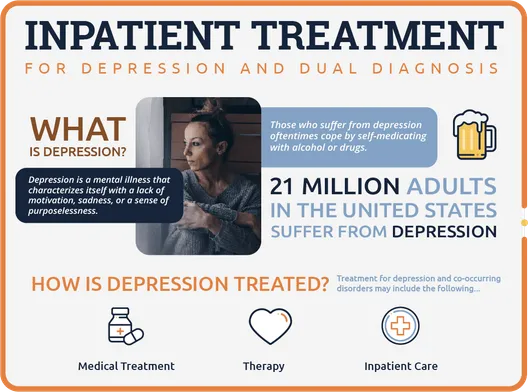
Dual diagnosis treatment, also known as co-occurring disorder treatment, is an integrated approach to treating individuals who struggle with both mental health disorders (such as depression) and substance use disorders simultaneously. This type of treatment differs from traditional substance abuse or mental health treatment, as it addresses both conditions concurrently. This is crucial because untreated mental health issues can often contribute to substance abuse, and vice versa.
In dual diagnosis treatment, medications may be prescribed to manage both substance abuse and depression. Common medications for depression include:
For substance use disorders, medications may include:
Various therapies can help individuals overcome substance abuse and depression, including:
Cognitive Behavioral Therapy (CBT): This evidence-based therapy focuses on identifying and changing negative thought patterns, beliefs, and behaviors that contribute to depression and substance abuse.
Group Therapy: Participating in group therapy sessions can provide individuals with a supportive environment where they can share experiences, learn from others, and develop healthy coping strategies.
Mindfulness Practices: Techniques such as meditation, deep breathing, and progressive muscle relaxation can help individuals manage stress, reduce cravings, and improve overall mental well-being.
There are different forms of dual diagnosis treatment programs available, including:
Residential Addiction Treatment Illinois: At residential treatment centers you’ll receive 24/7 care and support, typically lasting between 30 to 90 days. Patients live in a structured environment with access to medical supervision, therapy, and medication management.
Partial Hospitalization Treatment (PHP): PHP offers intensive mental health and depression treatment for several hours a day in a hospital or clinic setting while allowing patients to return home in the evenings. This program can typically last from two to six weeks.
Outpatient Treatment: This flexible program involves attending therapy sessions at a treatment facility while living at home. It typically lasts for several months, depending on individual needs.
Each program has its unique environment and level of care. Inpatient treatment provides the most structured setting, while outpatient treatment allows for greater flexibility. Challenges faced in these programs may include managing withdrawal symptoms, developing new coping skills, and addressing any underlying issues contributing to the co-occurring disorders.
Northern Illinois Recovery Center offers comprehensive treatment for both depression and substance abuse through dual diagnosis treatment. We can diagnose the causes and symptoms of your depression while also assessing your addiction.
From there, we can help you develop Northern IL depression treatment programs that may include:
To find out more about the depression treatment programs we offer, contact Northern Illinois Recovery Center today. Our licensed therapist can meet with you to go over your options and help you get the right treatment for your depression and addiction. Start your road to recovery today!